
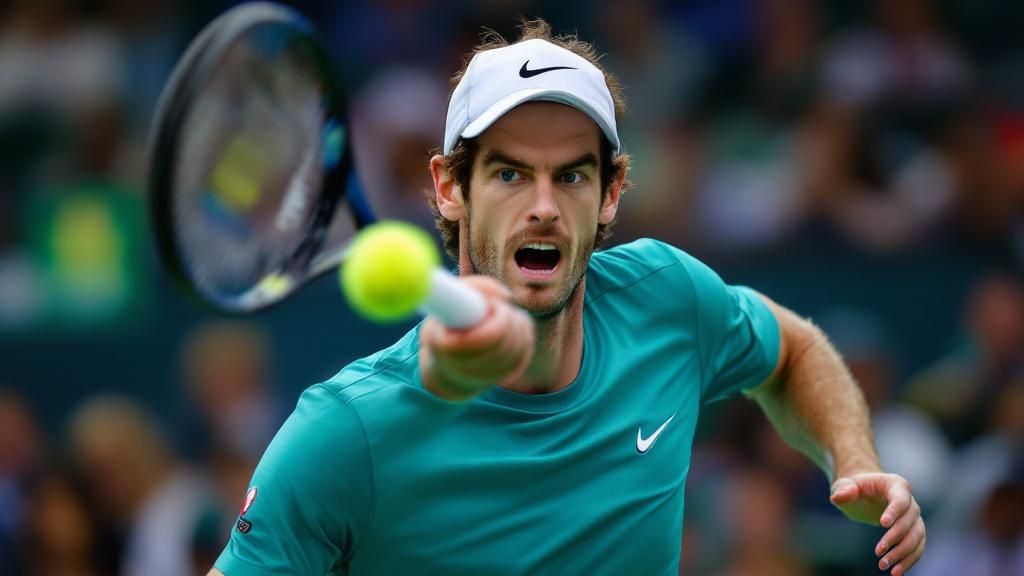
Andy Murray’s meticulously planned comeback to professional tennis has disrupted the British sports landscape, indicating a potential renaissance for the nation’s most successful player. Following his major surgical procedure, Murray’s calculated comeback to competitive play promises to transform the state of British tennis, encouraging a emerging generation whilst reviving hopes of additional major championship victories. This article examines how his disciplined method to competitive play is shaping developmental programmes, supporting rising prospects, and establishing Britain as a powerful presence in world tennis.
The Champion’s Return
Andy Murray’s comeback to competitive tennis goes well beyond a individual accomplishment; it symbolises resilience and determination that echoes across British athletics. After undergoing a potentially career-ending hip surgery, many doubted if the three-time major winner would ever return to top-level competition. His choice to attempt a return, however, showcases resolute devotion to his game and an unconquerable determination that has characterised his career. The athletics fraternity observes with keen interest as Murray tackles this transformative period, demonstrating that age and injury need not shape an athlete’s direction or performance goals.
The significance of Murray’s comeback plan extend well beyond his personal results on court. His involvement with professional tournaments revitalises British tennis, providing a clear illustration of resilience to emerging athletes facing their own obstacles. Moreover, his comeback narrative delivers essential insights in mental fortitude and bodily recovery, establishing new benchmarks for career longevity. As Murray returns to competition, he simultaneously mentors the emerging generation, creating a bridge between established excellence and emerging talent that strengthens the complete British tennis community.
Influence on Tennis Development in Britain
Murray’s comeback to professional competition has sparked significant momentum within UK tennis development. His presence at top-tier events enhances the game’s standing across Britain, drawing greater funding in young player training schemes and coaching centres. The ripple effects reach past top-level competition, motivating grassroots participation and encouraging sports authorities to focus on talent identification and support structures for up-and-coming British talent.
Mentoring and Support
Beyond his courtside displays, Murray has taken on an increasingly prominent coaching position within the British tennis community. His willingness to share experience gained from competing at the elite standard offers essential support to younger players navigating their own career trajectories. This informal coaching influence enhances formal structures, offering useful knowledge into competition readiness, mental resilience, and managing professional expectations.
Murray’s availability to up-and-coming athletes signals a break with traditional hierarchies in professional athletics. By working closely with gifted junior competitors, he exhibits a commitment towards the advancement of British tennis. His coaching role goes further than technical coaching, covering strategic career guidance, sponsorship deals, and psychological techniques vital to sustaining long-term competitive success at international level.
- Provides expert advice on tournament selection and scheduling
- Shares psychological strength methods built over professional journey
- Facilitates connections to coaching and advisory networks
- Demonstrates workplace excellence through consistent work ethic
- Encourages balanced approach between ambition and individual health
Competitive Performance and Rankings
Murray’s return to competitive play has shown impressive durability, with his performance metrics revealing a player determined to reclaim his position amongst tennis’s elite. Despite the constant physical pressures of elite-level play, his positional progression has steadily improved, demonstrating his tactical expertise and emotional strength. His successes against recognised opponents have sparked renewed debate about his capacity to challenge for Grand Slam honours, whilst also delivering important insights on his physical rehabilitation and competitive readiness.
The strategic approach of Murray’s tournament selection has proven instrumental in managing his recuperation whilst preserving competitive sharpness. By carefully balancing high-level competition with sufficient rest intervals, he has enhanced his competitive progression without undermining long-term sustainability. His results have galvanised British tennis enthusiasts and analysts alike, proving that prior injuries and advancing years need not reduce a competitor’s drive or accomplishments at the highest echelons of professional sport.
Future Prospects and Legacy
Andy Murray’s deliberate re-entry to competitive tennis has fundamentally altered views on what defines a accomplished tennis trajectory. His thoughtful methodology illustrates that extended careers and focused competition can coexist bodily constraints, offering important insights to ambitious sportspeople worldwide. The ripple effects of his return go further than personal achievement; Murray’s involvement in professional tennis reinvigorates British tennis infrastructure, generating investment and media attention once allocated to other areas. His impact on emerging talent demonstrates how accumulated knowledge and perseverance go beyond conventional career trajectories, setting new benchmarks for competitive determination.
Looking forward, Murray’s legacy will undoubtedly include more than tournament victories and ranking positions. His commitment to mentoring up-and-coming British competitors has created a sustainable pathway for the coming generation of competitors pursuing global recognition. By reconciling competitive goals with coaching duties, Murray has positioned himself as both active participant and custodian of British tennis’s future. This combined position reinforces the nation’s competitive foundation whilst ensuring his deep experience benefits the sport well beyond his final competitive involvement, cementing his status as pivotal force within British sporting history.
